Research
(*: equal contribution)
Please feel free to contact me if you are interested in any of the following works.
Journal Publications
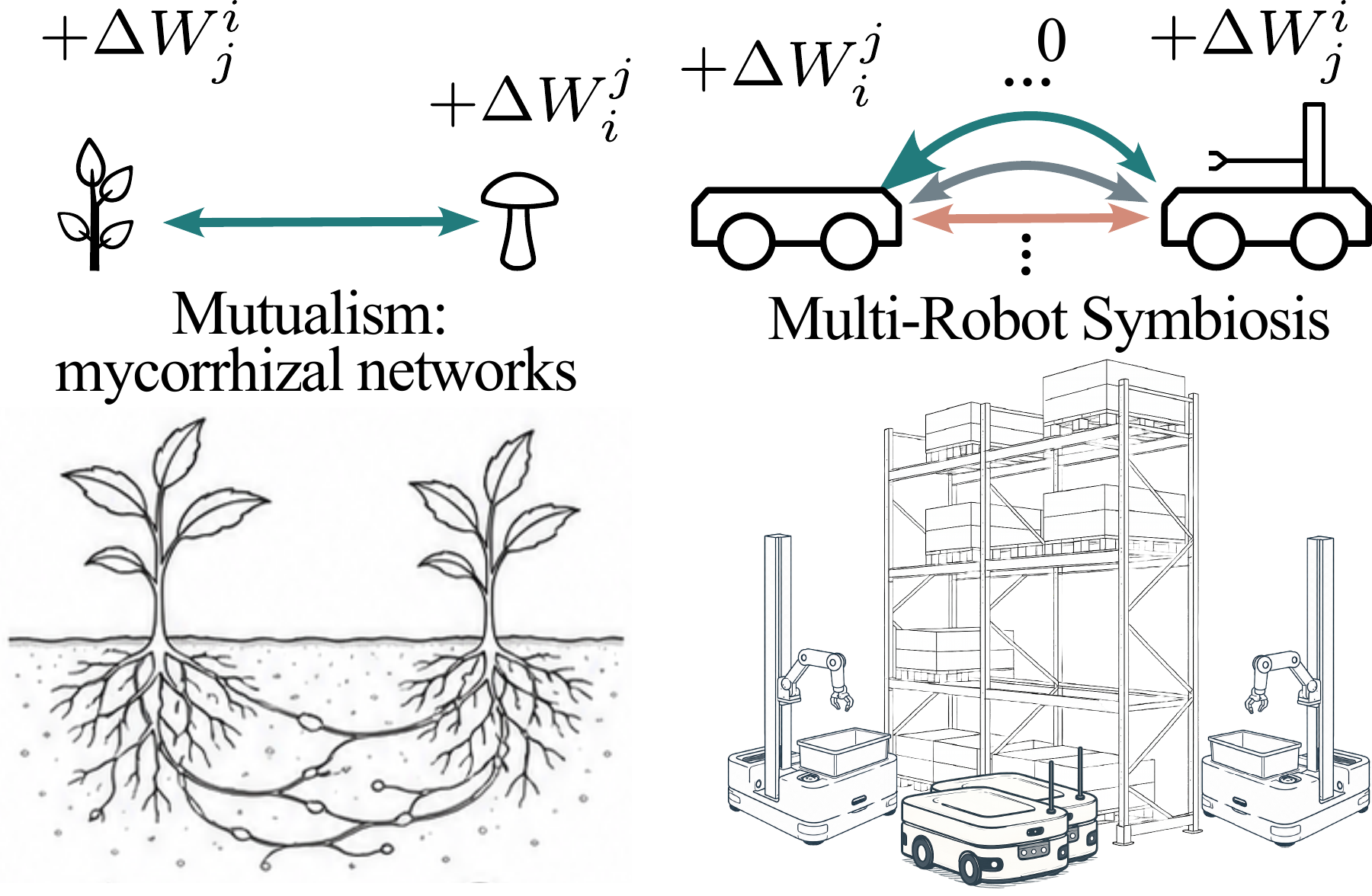
PRISM: Policy-shaping via Reward decomposition for Inter-agent Symbiosis in Multi-Robot Cooperation
Authors: Xuezhi Niu & Didem Gürdür Broo
Under review at The International Journal of Robotics Research (IJRR)
[Paper coming soon] [Code] [Website] [Abstract]
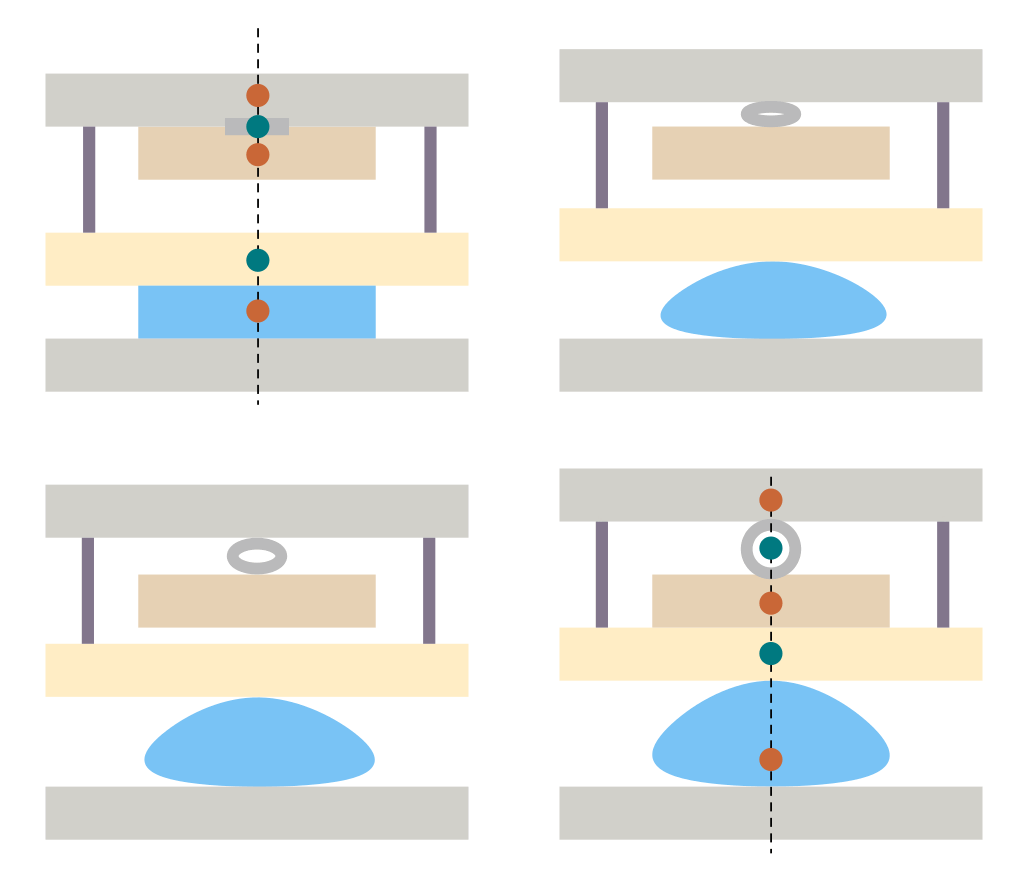
Miniaturized Multifunctional Valves for Intelligent Pneumatic Systems in Soft Robotics
Authors: Jing Xu, Xuezhi Niu, Jakob Andersson, Didem Gürdür Broo & Klas Hjort
Advanced Intelligent Systems, 2026
[Paper coming soon] [Abstract] [BibTeX]
@article{xu2026miniaturized,
  title = {Miniaturized Multifunctional Valves for Intelligent Pneumatic Systems in Soft Robotics},
  author = {Xu, Jing and Niu, Xuezhi and Andersson, Jakob and Gürdür Broo, Didem and Hjort, Klas},
  journal = {Advanced Intelligent Systems},
  year = {2026},
  note = {Accepted for publication}
}
Optimal gait design for a soft quadruped robot via multi-fidelity Bayesian optimization
Authors: Kaige Tan, Xuezhi Niu, Qinglei Ji, Lei Feng & Martin Törngren
Applied Soft Computing, 2025
[Paper] [Code] [Abstract] [BibTeX]
@article{TAN2025112568,
  title = {Optimal gait design for a soft quadruped robot via multi-fidelity Bayesian optimization},
  journal = {Applied Soft Computing},
  volume = {169},
  pages = {112568},
  year = {2025},
  issn = {1568-4946},
  doi = {https://doi.org/10.1016/j.asoc.2024.112568},
  url = {https://www.sciencedirect.com/science/article/pii/S1568494624013425},
  author = {Kaige Tan and Xuezhi Niu and Qinglei Ji and Lei Feng and Martin Törngren},
}
Conference Publications
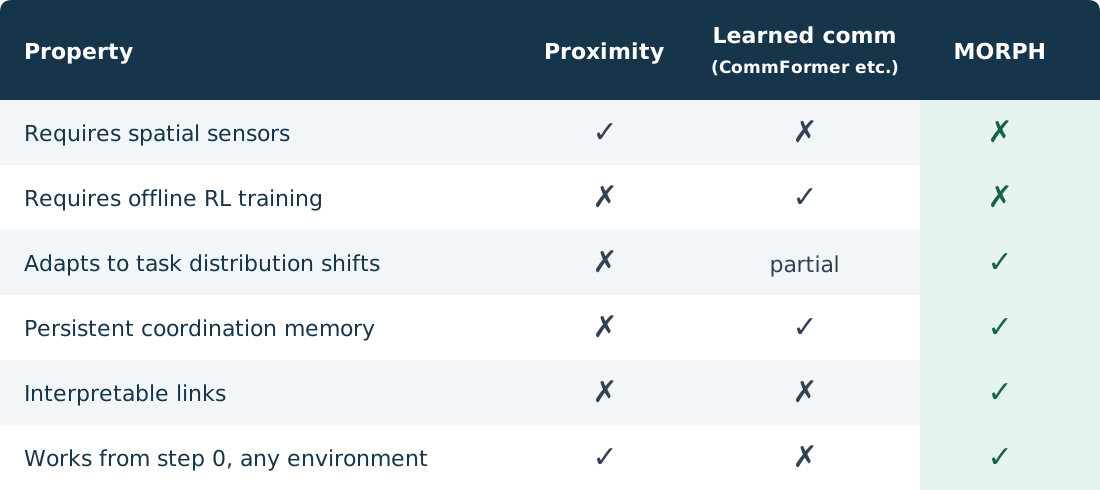
MORPH: Self-Organising Multi-Robot Task Allocation via Neuroplasticity-Inspired Adaptive Topology
Authors: Xuezhi Niu & Didem Gürdür Broo
The 23rd European Conference on Multi-Agent Systems (EUMAS 2026), Malmö, Sweden
[Paper coming soon] [Code] [Abstract] [BibTeX]
@inproceedings{niu2026morph,
  title = {MORPH: Self-Organising Multi-Robot Task Allocation via Neuroplasticity-Inspired Adaptive Topology},
  author = {Niu, Xuezhi and Gürdür Broo, Didem},
  booktitle = {The 23rd European Conference on Multi-Agent Systems (EUMAS)},
  address = {Malmö, Sweden},
  year = {2026},
  note = {Accepted for publication}
}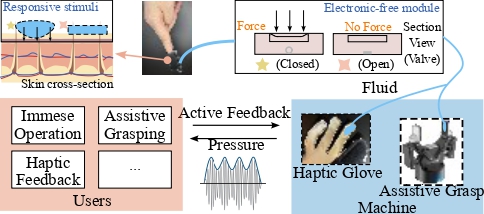
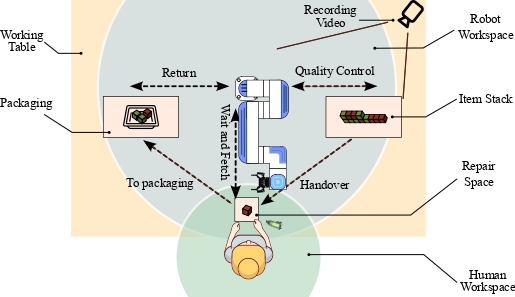
TouchDrive: Electronics-Free Tactile Sensing Interface for Assistive Grasping
Authors: Jing Xu, Xuezhi Niu , Didem Gürdür Broo & Klas Hjort
Presented at the RoboTac workshop, IEEE International Conference on Robotics and Automation (ICRA 2026), Vienna, Austria
@misc{xu2026touchdriveelectronicsfreetactilesensing,
      title={TouchDrive: Electronics-Free Tactile Sensing Interface for Assistive Grasping},
      author={Jing Xu and Xuezhi Niu and Didem Gurdur Broo and Klas Hjort},
      year={2026},
      eprint={2605.06432},
      archivePrefix={arXiv},
      primaryClass={cs.RO},
      url={https://arxiv.org/abs/2605.06432},
}
"What do I do now?": Spontaneous Human Responses to Robot Effectiveness and Efficiency Malfunctions in Collaborative Robotics
Authors: Alexandros Rouchitsas, Xuezhi Niu , Ginevra Castellano & Didem Gürdür Broo
Accepted to The ACM Conference on Human Factors in Computing Systems (CHI 2026), Barcelona, Spain
@inproceedings{rouchitsas2026what,
  title = {“What do I do now?”: Spontaneous Human Responses to Robot Effectiveness and Efficiency Malfunctions in Collaborative Robotics},
  author = {Rouchitsas, Alexandros and Niu, Xuezhi and Castellano, Ginevra and Gürdür Broo, Didem},
  booktitle = {Proceedings of the 2026 CHI Conference on Human Factors in Computing Systems},
  series = {CHI '26},
  address = {Barcelona, Spain},
  publisher = {ACM},
  year = {2026},
  month = apr,
  pages = {1--17},
  doi = {10.1145/3772318.3793419},
  url = {https://doi.org/10.1145/3772318.3793419}
}
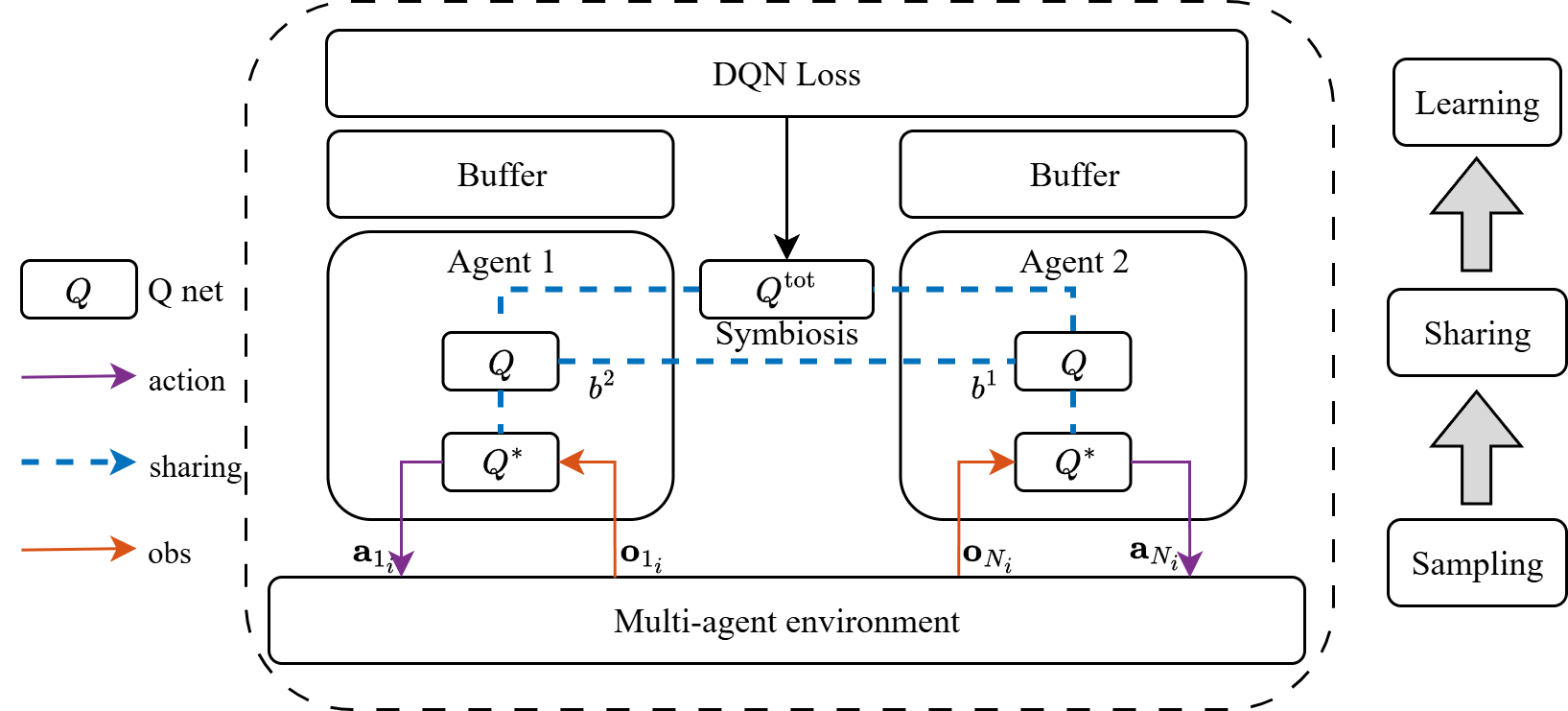
Investigating Symbiosis in Robotic Ecosystems: A Case Study for Multi-Robot Reinforcement Learning Reward Shaping
Authors: Xuezhi Niu & Didem Gürdür Broo
2025 9th International Conference on Robotics and Automation Sciences (ICRAS), Osaka, Japan
[Paper] [Code] [Abstract] [BibTeX]
@INPROCEEDINGS{11108729,
  author={Niu, Xuezhi and Broo, Didem Gürdür},
  booktitle={2025 9th International Conference on Robotics and Automation Sciences (ICRAS)},
  address={Osaka, Japan},
  title={Investigating Symbiosis in Robotic Ecosystems: A Case Study for Multi-Robot Reinforcement Learning Reward Shaping},
  year={2025},
  pages={112-117},
  doi={10.1109/ICRAS65818.2025.11108729}
}
Enabling Symbiosis in Multi-Robot Systems through Multi-Agent Reinforcement Learning
Authors: Xuezhi Niu, Natalia Calvo Barajas & Didem Gürdür Broo
2025 IEEE 8th International Conference on Industrial Cyber-Physical Systems (ICPS), Emden, Germany
@INPROCEEDINGS{niu2025enabling,
  author={Niu, Xuezhi and Barajas, Natalia Calvo and Broo, Didem Gürdür},
  booktitle={2025 IEEE 8th International Conference on Industrial Cyber-Physical Systems (ICPS)},
  address={Emden, Germany},
  title={Enabling Symbiosis in Multi-Robot Systems Through Multi-Agent Reinforcement Learning},
  year={2025},
  pages={1-7},
  doi={10.1109/ICPS65515.2025.11087893}
}
Optimal Gait Control for a Tendon-driven Soft Quadruped Robot by Model-based Reinforcement Learning
Authors: Xuezhi Niu*, Kaige Tan*, Didem Gürdür Broo & Lei Feng
2025 IEEE International Conference on Robotics and Automation (ICRA), Atlanta, USA
[PDF] [Code] [Abstract] [BibTeX]
@inproceedings{niu2025optimal,
	title     = {Optimal Gait Control for a Tendon-driven Soft Quadruped Robot by Model-based Reinforcement Learning},
	author    = {Niu, Xuezhi and Tan, Kaige and G{\"u}rd{\"u}r Broo, Didem and Feng, Lei},
	booktitle = {2025 IEEE International Conference on Robotics and Automation (ICRA)},
	address = {Atlanta, USA},
	year      = {2025},
  pages     = {9287-9293},
	doi       = {10.1109/ICRA55743.2025.11128611},
	url       = {https://doi.org/10.1109/ICRA55743.2025.11128611}
}
Thesis
- Optimal Gait Control of Soft Quadruped Robot by Model-based Reinforcement Learning
Xuezhi Niu
M.Sc. Thesis, KTH Royal Institute of Technology, Stockholm, Sweden, 2023
Technical Report
- Electronically Vacuum Regulated Shut-off Valve for Milking System
Carl Egenäs*, Felix Ekman*, Chenqi Ma*, Tim Naser*, Xuezhi Niu*, Axel Sernelin*, Samuel Stenow*, Benjamin StrÖm*
H.K. Project, KTH Royal Institute of Technology, Stockholm, Sweden, 2023
Reviewer
| Venue | Years |
|---|---|
| IEEE International Conference on Robotics and Automation (ICRA) | 2025, 2026 |
| IEEE/ASME International Conference on Advanced Intelligent Mechatronics (AIM) | 2024 |
| IEEE International Conference on Industrial Cyber-Physical Systems (ICPS) | 2025 |
| IEEE-RAS International Conference on Humanoid Robots (Humanoids) | 2024 |
| IEEE International Conference on Robot and Human Interactive Communication (RO-MAN) | 2025 |
| Journal of Field Robotics (JFR) | 2026 |